
Fast, Reliable Blown In Insulation Across Los Angeles
Blown In Insulation in Los Angeles typically costs between $1,800 and $4,600 for an average 1,500-square-foot attic, with most jobs completed in a single day. If you’re in a 1920s West Adams stucco home or a 1960s Van Nuys tract house, the odds are good your attic is under-insulated and costing you real money every month. Our Blown In Insulation crew serves all of Los Angeles with same-week scheduling and technicians you’ll know by name before they arrive. Call (213) 376-3824 for a written price before any work begins.
Why Aspen Attic Insulation Los Angeles Is Los Angeles’s Preferred Blown In Insulation Company
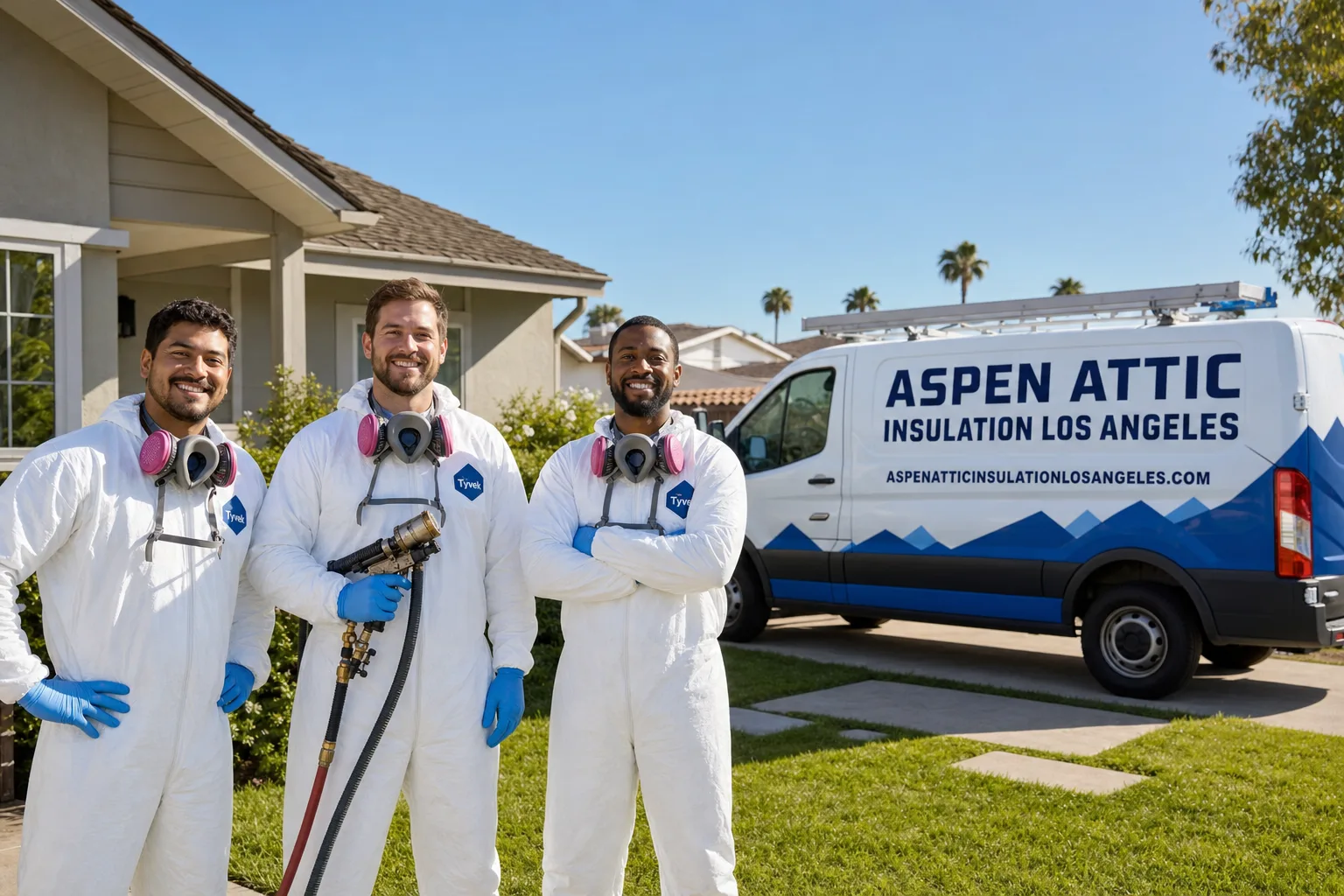
Garrett Sloane runs our Los Angeles operation with a simple rule: the person on the estimate sheet is the person who shows up. Every technician is background-checked and identity-verified, arrives in a clean marked uniform, and shows a photo ID badge at the door. Before your appointment, we send the tech’s name and photo to your phone. If anyone else arrives, the visit is free and we make it right. That’s the Threshold Standard, and we’ve held to it since 2002.
Our Los Angeles customers tell us the same thing on repeat: they wanted an insulation company that didn’t feel like a gamble. Homeowners here, especially those home alone during the day or with young kids, want to know exactly who is walking up the driveway. We put it in writing before anyone rings the bell. The price is written before work starts, and every job carries our 365-Day Done Right Promise covering labor and materials for a full year. If something isn’t right, we come back and fix it free.
We answer the phone with a live person, 24/7. No voicemail loops, no call-back windows. When a San Pedro homeowner calls at 7 a.m. about a cold bedroom, someone picks up and helps. That’s not a marketing line, it’s how we’ve operated since 2002 as part of the Threshold Group family, independently owned and operated right here in Los Angeles.
Blown In Cellulose Insulation in Los Angeles
Blown In Cellulose Insulation is the workhorse retrofit for Los Angeles’s older housing stock, and it’s what we recommend for most pre-1980s stucco-over-wood-frame homes. Here’s what it involves: we dense-pack or open-blow loose cellulose fibers (recycled paper treated with borate for fire and pest resistance) into attic cavities and wall bays to fill every gap that fiberglass batts leave behind. In Los Angeles, where 1920s through 1970s homes dominate whole neighborhoods from Highland Park to Leimert Park, cellulose fills the irregular framing and old plaster-and-lath cavities that rigid batts can’t touch. Expect to pay $1,900 to $4,600 for a full attic retrofit, depending on square footage and whether we’re removing degraded material first.
Removing the Old Layer First
In a lot of Los Angeles homes, the existing insulation isn’t just thin, it’s gone. We pull out the old stuff, inspect the deck for moisture damage, then blow in fresh cellulose to the right depth. Skipping this step means new insulation just sits on top of failing material.
Air Sealing and Top Plates
Cellulose performs best when we seal the ceiling plane first. We foam the top plates, can lights, and plumbing penetrations so the loose-fill isn’t fighting air leaks from day one. In a 1950s Valley home, air sealing alone can cut afternoon heat gain dramatically before we even add new material.
Blown In Fiberglass Insulation in Los Angeles
Blown In Fiberglass Insulation uses loose glass fibers blown into attic cavities to create a consistent thermal blanket, and it makes sense for newer Los Angeles homes that already have a solid air-sealing base or for budget-conscious retrofits where the attic is easily accessible. You’ll typically pay $1,600 to $3,800 for a standard open-blow job in Los Angeles, though hillside homes with cathedral ceilings and complex framing run higher because of the access work involved. We stock products from Johns Manville and CertainTeed so the right density goes in, not just whatever is on the truck.
When Fiberglass Beats Cellulose
If your attic gets insanely hot in summer, which most San Fernando Valley attics do, blown fiberglass doesn’t settle as much under extreme heat as some older cellulose blends. But it does settle over time, and in a 120°F attic, that settlement happens faster than the manufacturer’s lab numbers suggest. We calculate depth with that Los Angeles heat factor in mind, not the national average.
Dense-Pack for Walls
For uninsulated stucco walls from the 1930s and 40s, dense-packed fiberglass can be blown behind the plaster through small drilled holes. It fills the stud bays without major demolition. We’ve done this in neighborhoods like Echo Park and Silver Lake where tearing out original plaster isn’t an option anyone wants.
Trusted Brands We Service in Los Angeles
We stock blown-in insulation materials from Johns Manville, CertainTeed, and GreenFiber, so Los Angeles customers aren’t waiting on a parts order from out of state. If you have a preference based on a previous installation or an energy audit recommendation, we’ll match it. Our techs are trained on Knauf and Rockwool systems too, and we carry enough local inventory to handle same-week jobs across Los Angeles without the two-week lead time some national contractors quote. The material goes in matched to your home’s construction and your attic’s actual conditions, not whatever the supply house had on sale.
Common Blown In Insulation Problems We See in Los Angeles Homes
- Settled fiberglass in Valley attics: After years of 100°F+ summer heat, blown fiberglass compacts and loses R-value from the top down. We regularly find a 12-inch layer that’s effectively bare in the top 6 inches, which means the attic is doing half the job the homeowner thinks it’s doing.
- Mold from marine-layer moisture: Coastal neighborhoods like Westchester and Playa del Rey get humid marine air moving into unvented attics. When cellulose is dense-packed improperly behind stucco walls, that moisture condenses and triggers mold growth inside the wall cavity.
- Blocked soffit vents in legacy homes: Older Los Angeles homes with knob-and-tube wiring often had no air sealing. When blown-in insulation is added without baffles, it fills the soffit vents, which traps moisture in the attic and causes deck rot during humid marine-layer nights.
- Crumbled original fiberglass: In 1950s San Fernando Valley tract homes, the original 1-inch foil-backed fiberglass has often disintegrated into dust after 60 years of heat. Homeowners are shocked to find their “insulated” attic is effectively bare, and new blown-in material has to go in over a degraded base layer that national guides never mention.
Pricing for Blown In Insulation in Los Angeles, CA
A typical blown-in attic retrofit in Los Angeles runs $1,800 to $4,600 for cellulose and $1,600 to $3,800 for fiberglass, based on 1,500 square feet of attic. Homes that need old material removed, air sealing, or wall cavity work will land at the higher end. Hillside homes with cathedral ceilings run $800 to $2,000 more because of access and baffle work. A 1920s stucco home with uninsulated walls and no attic access is a different project than a 1970s ranch with a pull-down ladder, and the price reflects that. What you’ll never get is a surprise line item after the fact. Every Los Angeles customer receives a written price before work starts, and that price is what you pay. Call (213) 376-3824 for a free estimate, and we’ll put the number in writing.
We Also Serve Cities Near Los Angeles
While this page focuses on Los Angeles proper, our crews also run jobs in South Gate, Bell, Gardena, and West Hollywood. If you’re in one of those areas, same-week scheduling still applies and the written price guarantee is identical. Give us your cross streets and we’ll give you a time window that holds.
Serving Los Angeles, CA - Our Local Coverage Area
We’re based in the Los Angeles area and know this community well. Use the map below to see our service coverage - if you’re nearby, we can almost certainly help.
FAQs About Blown In Insulation in Los Angeles
Because the original 1-inch foil-backed fiberglass installed in 1950s Valley tract homes has usually crumbled to dust after 60 years of 100°F+ attic temperatures, and blowing new material over it leaves the degraded base layer in place. We remove it, inspect the deck, air seal, then blow in fresh GreenFiber cellulose. Skipping removal means your new insulation sits on top of a layer that hasn’t worked in decades. Call (213) 376-3824 and we’ll tell you what’s actually up there.
Technically yes, but you’d be paying to insulate a house that still leaks air through the ceiling plane. In pre-1980s Los Angeles stucco homes, the gaps around top plates, can lights, and plumbing chases are the main source of heat loss. We seal those first, then blow new cellulose or fiberglass over the existing material if it’s still viable. It’s the difference between a job that feels better on day one and a job that actually cuts your bill for years.
Cellulose handles humidity fine when the attic is properly vented and the cellulose is installed at the correct density. The problems start when dense-packed cellulose is installed too densely behind stucco walls in unvented attics, trapping moisture and growing mold. In coastal Los Angeles, we always check ventilation before we blow, and we use baffles to keep soffit vents clear. The material isn’t the issue; the installation is.
For hillside Los Angeles homes with cathedral ceilings and irregular framing, cellulose usually wins because it conforms to complex cavities better than loose fiberglass. The access work is the bigger cost driver than the material. Expect to pay $800 to $2,000 more than a standard attic job because we’re working in tight rafter bays and often installing access panels. We’ll quote it flat before we start.
For Los Angeles, target R-38 to R-49 in the attic, which translates to roughly 10 to 14 inches of blown cellulose or 14 to 18 inches of blown fiberglass. The hotter your neighborhood, the more you want. A Valley home in Northridge or Reseda wants the higher end, while a coastal home in Playa del Rey can get away with R-38. We’ll calculate the right depth for your specific house and put it in the written estimate. Call (213) 376-3824 to get started.
If you live in Los Angeles and your attic still has the original insulation from decades ago, you’re paying for it every summer afternoon and every winter night. We’ll send a tech whose name you know, put the price in writing before any work starts, and back everything with our 365-Day Done Right Promise in writing. We recently worked on a 1950s tract home in the San Fernando Valley where the owner assumed the attic was insulated, but our tech found only the original 1-inch foil-backed fiberglass had disintegrated into dust after 60 years of Valley heat. We dense-packed the 2×6 rafter bays with GreenFiber cellulose and air-sealed the top plates, immediately cutting the afternoon heat gain that had been blasting through the ceiling. That’s the job we do in Los Angeles, and it starts with a phone call to (213) 376-3824.
Written by Garrett Sloane, Owner at Aspen Attic Insulation Los Angeles, serving Los Angeles since 2002.