
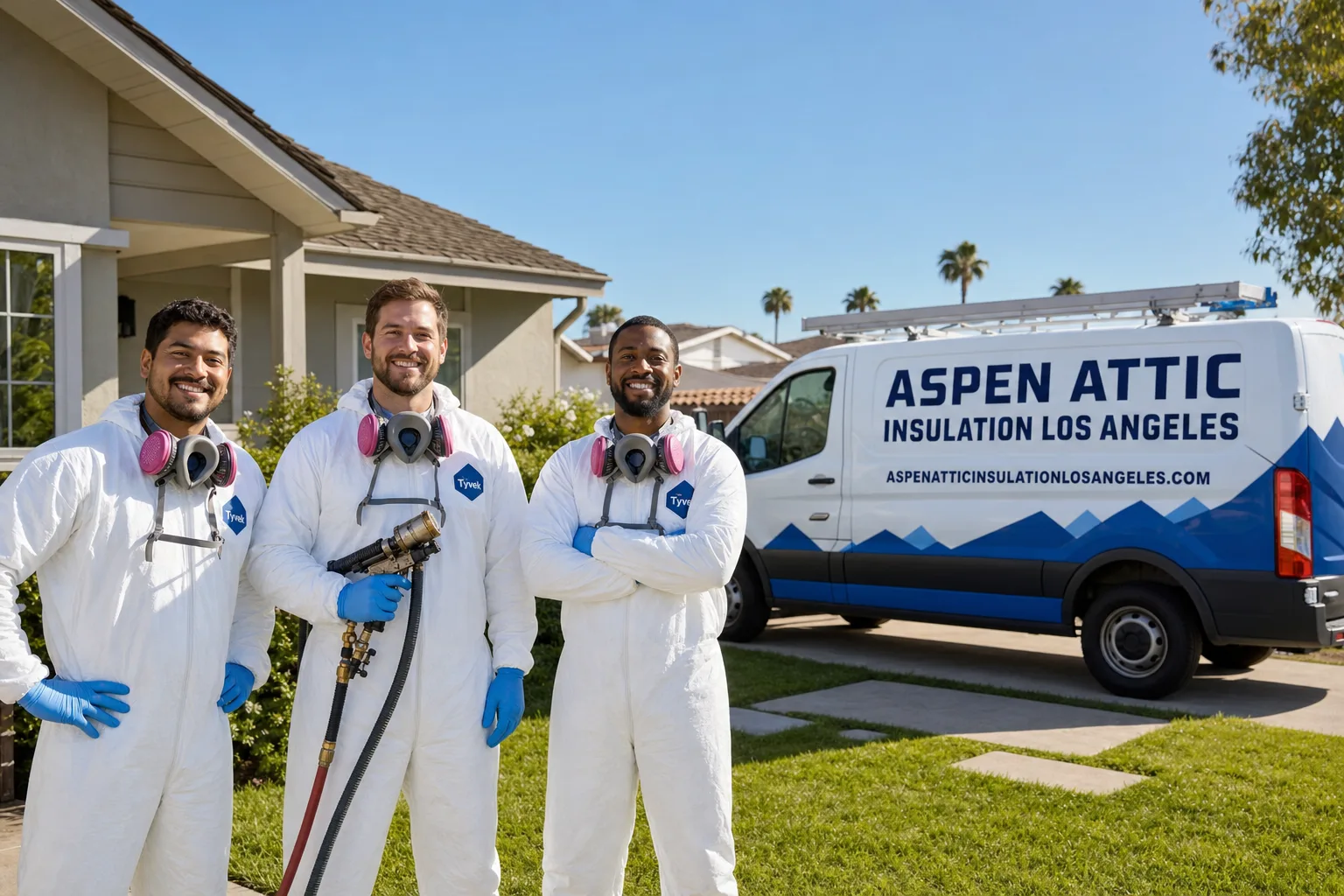
Fast, Reliable Blown In Insulation Across Ladera Heights
Blown in insulation in Ladera Heights typically costs $1,800 to $4,200 for a full attic retrofit, with dense-pack wall work adding $3,500 to $8,000 depending on square footage. Most jobs are completed same day or next day. The tricky part here isn’t the blow-in itself. It’s the cathedral ceilings, stucco walls, and 1960s open-beam construction that make Ladera Heights homes different from anything across La Cienega. Call (213) 376-3824 and Garrett Sloane will put a written price in your hand before any material leaves the truck.
Our crews work Ladera Heights weekly. We know the hillside lots off Slauson Avenue, the mid-century subdivisions near Ladera Park, and the homes along Fairview Boulevard where the original builders skipped insulation entirely. If your January heating bill climbs while your July air conditioner never shuts off, the problem is likely sitting right above your head. We fix it, and we put the tech’s name and photo in a text before we knock.
Why Aspen Attic Insulation Los Angeles Is Ladera Heights’s Preferred Blown In Insulation Company
Ladera Heights homeowners ask one question before anything else: who’s walking through my door? We answer that before the appointment even exists. Every Aspen technician is background-checked, identity-verified, and sent to you by name and photo ahead of the visit. They arrive in a marked uniform and show a photo ID badge at the door. If anyone else shows up claiming to be us, the visit is free and we make it right. That’s the Threshold Standard, and it applies on every job, every visit, no exceptions.
We’ve been doing this since 2002 as part of the Threshold Group family, and we’ve built our Ladera Heights reputation on showing up when we say we will. The homes here aren’t simple attics. They demand a specific set of skills: dense-packing exterior stucco walls, insulating cathedral ceilings with no attic cavity, and air-sealing the gaps around single-pane glass walls that bleed conditioned air year-round. The crews we dispatch to Ladera Heights have done this work dozens of times. They know what a 1963 hillside home off Slauson is going to throw at them before they open the door.
Every job gets a written price before work begins. No verbal estimate, no handshake deal. You see the number, you approve it, then we start. And when we finish, every repair and installation is covered by the 365-Day Done Right Promise: 365 days, in writing, covering labor and materials. If something fails, we come back free. That’s the whole promise.
We also answer the phone with a live person, 24/7. Not a voicemail loop. Not a callback window. You call, a person picks up. For Ladera Heights homeowners who work odd hours or notice a problem in the middle of a hot Saturday afternoon, that matters.
Cellulose Insulation in Ladera Heights
Cellulose insulation is the workhorse for Ladera Heights retrofit jobs, especially in those hillside homes where glass meets stucco and the attic access is a 2×2 hatch from 1968. Cellulose is loose fiber. It gets blown into place at a controlled density, filling every irregular gap behind walls and across attic floors that fiberglass batts can’t touch. In Ladera Heights, that’s the whole game: older homes with angled ceilings, open beams, and no straight runs anywhere.
A typical cellulose blow-in for a Ladera Heights attic runs $1,800 to $3,600, depending on square footage and target R-value. Dense-packing exterior stucco walls runs higher, usually $4,000 to $8,000 for a full home, because the work is slow and methodical. The payoff is immediate. Cellulose fills the gaps that let coastal heat and winter chill move through 1960s walls that were originally built with nothing.
Dense-Pack for Stucco Walls
Many Ladera Heights homes have no wall insulation at all. The only way to retrofit without tearing out drywall is dense-packing: drilling small holes through the stucco exterior and blowing cellulose in at a high, consistent density. If it’s not packed correctly, it slumps. We use GreenFiber cellulose and pack it to spec, every time.
We also air-seal the wall cavity before we blow. That stops the coastal breezes from robbing the cellulose of its effectiveness. On a 1963 hillside home off Slauson Avenue, we dense-packed the stucco walls and air-sealed the low-slope roof deck edges. The owner’s cooling runtime during a July heat wave dropped by nearly a third.
Retrofit Over Existing Batts
Some Ladera Heights homes got a thin layer of fiberglass in the 1970s and nothing since. We blow cellulose right over the top, filling the bare spots and settling into the gaps. It’s faster than a full removal and costs less, usually $2,000 to $4,000 depending on attic size.
See how our Blown In Insulation team handles retrofit overlays and full replacements.
Blown In Attic Insulation in Ladera Heights
Blown in attic insulation is the first thing we check on any Ladera Heights home built before 1975, because the original attic blow was often an inch or two of settled fiberglass that’s now doing almost nothing. Loose fibers get blown across the attic floor to a consistent height and density, filling the corners and odd angles that batt insulation leaves bare. In a low-slope 1950s roof, those bare spots radiate heat straight through open-beam ceilings.
Attic blow-in pricing in Ladera Heights runs $1,800 to $4,200 for a typical 1,500 to 2,400 square foot home. The variables are access, existing insulation depth, and whether air sealing is needed around the roofline. We use Owens Corning AttiCat and Johns Manville Climate Pro, matched to the specific ceiling type and heat profile of the home.
Air Sealing Before the Blow
Blowing insulation into an attic without air sealing is like wearing a down jacket over a holey shirt. In Ladera Heights homes with open-beam ceilings and expansive glass, the gaps around beam penetrations and wall plates are where the heat leaves. We seal those first, then blow. The air sealing typically adds $400 to $900 to the job and makes the insulation perform at its rated R-value.
Cathedral Ceilings Without Attic Access
Some upper Ladera Heights homes have cathedral ceilings with no attic cavity at all. For those, we don’t blow the attic. We dense-pack from below through the ceiling plane or from above through the roof deck, depending on construction. For homeowners considering spray foam insulation in Ladera Heights, we can discuss whether that option fits your specific roof assembly. This is specialized work, and it’s one of the reasons a Ladera Heights homeowner should call someone who has done it before, not a crew that only sees flat ceilings in newer neighborhoods.
We cover every neighborhood in Ladera Heights, from the hillside streets above Slauson to the grid around Ladera Park.
Trusted Brands We Service in Ladera Heights
We stock and install blown-in materials from GreenFiber, Owens Corning, and Johns Manville, matched to the specific job rather than whatever is left on the shelf. For Ladera Heights stucco walls, we lean on GreenFiber cellulose because it packs densely and resists slumping inside cavity walls. For open attics and low-slope roofs, Owens Corning AttiCat gives consistent loft and coverage. Johns Manville Climate Pro works well in tighter joist bays. We keep materials staged for Ladera Heights jobs, which means same-week scheduling for most calls, not a two-week wait while parts ride in from somewhere else.
Common Blown In Insulation Problems We See in Ladera Heights Homes
- Settled or wind-blown attic blow leaving bare spots. Low-slope roofs from the 1950s and 60s don’t hold loose fill evenly. Years of coastal air movement shift it around, and suddenly a three-foot strip above the living room has zero insulation. We see it on nearly every old Ladera Heights attic we open.
- Unsealed gaps around glass walls and door frames. These mid-century homes were built for aesthetics, not thermal performance. The gaps around single-pane glass and aluminum door frames let conditioned air escape in every direction. Blowing insulation without sealing these gaps cuts the effective R-value dramatically.
- Slumped injection foam or dense-pack cellulose in stucco walls. If a previous contractor packed the walls too light, the material settles over time. That leaves thermal voids behind the mid-century exterior finish. We re-dense-pack to spec, which means checking density every few feet rather than trusting the machine setting.
- Nothing in the walls at all. A surprising number of original Ladera Heights homes have empty wall cavities. Heat moves through the studs and the air gaps without resistance. Dense-pack cellulose changes that, but it has to be installed at the correct density to actually work.
Pricing for Blown In Insulation in Ladera Heights, CA
Expect to pay $1,800 to $4,200 for attic blown in insulation on a typical Ladera Heights home. Dense-packing exterior walls runs $4,000 to $8,000. Air sealing adds $400 to $900. Cathedral ceiling retrofit work through the roofline or ceiling plane runs $6,000 to $12,000, because access is tight and labor is slow. The biggest cost variable is whether your attic has been air sealed and what R-value the home needs. We give you a written price before work starts, every job, always. Call (213) 376-3824 and Garrett Sloane will come out, measure, and hand you a number.
We Also Serve Cities Near Ladera Heights
While most of our days are spent in Ladera Heights, our crews also take calls in Blown In Insulation in Ladera Heights and the surrounding communities, including Los Angeles, West Hollywood, Santa Monica, and South Gate. Same crews, same Threshold Standard, same written price before work begins.
Serving Ladera Heights, CA - Our Local Coverage Area
We’re based in the Ladera Heights area and know this community well. Use the map below to see our service coverage - if you’re nearby, we can almost certainly help.
FAQs About Blown In Insulation in Ladera Heights
We dense-pack from above through the roof deck or from below through the ceiling plane. The method depends on your roof pitch and exterior finish. For stucco homes, we typically work from the exterior wall side. For open-beam interiors, we go through the ceiling with small, patched access points. This is one of the most common call types we get in upper Ladera Heights, and it’s a completely different procedure from a standard attic blow-in. Call (213) 376-3824 for a written assessment.
It depends on how much existing insulation is up there and whether the envelope has been air sealed. In most cases, blown-in insulation helps significantly, but the big win comes from sealing the gaps around beams, glass walls, and wall plates first. Without air sealing, you’re paying to heat and cool the hillside. We’ll tell you honestly what’s needed, and the price is in writing before we start.
For open attics with low-slope roofs, we prefer Owens Corning AttiCat or Johns Manville Climate Pro. For dense-packing stucco walls, GreenFiber cellulose is the better product because it holds density and resists slumping. The right answer depends on your specific ceiling type and where the insulation is going. We stock all three and choose based on the test results, not availability.
Yes. We drill small access holes through the stucco, blow the cavity to correct density, then patch the holes with color-matched stucco. The patches are visible up close for a short time, then they blend. This is the standard method for insulating mid-century Ladera Heights homes without tearing out interiors, and we’ve done it on hillside homes all through the neighborhood.
Because the attic insulation is likely settled, wind-blown, or was installed without air sealing the gaps around your open-beam ceilings and glass walls. Coastal heat pushes through those gaps and radiates through the ceiling plane. A proper air-seal-and-blow retrofit fixes it. Call (213) 376-3824 for a free estimate; we’ll measure, diagnose, and hand you a written price before any work starts.
Written by Garrett Sloane, Owner at Aspen Attic Insulation Los Angeles, serving Ladera Heights since 2002.